Indian constitution amendments 37 to 46

Indian constitution amendments 37 to 46
37. The Constitution (Thirty-seventh Amendment) Act, 1975—By this Act, Union Territory of Arunachal Pradesh was provided with a Legislative Assembly. Article 240 of the Constitution was also amended to provide that as in the case of other union territories with Legislatures, the power of President to make regulations for the Union Territory of Arunachal Pradesh may be exercised only when the assembly is either dissolved or its functions remain suspended.
38. The Constitution (Thirty-eighth Amendment) Act, 1975—This Act amended Articles 123, 213 and 352 of the Constitution to provide that the satisfaction of President or Governor contained in these Articles would be called in question in any court of law.
39. The Constitution (Thirty-ninth Amendment) Act, 1975—By this Act, disputes relating to the election of President, Vice-President, Prime Minister and Speaker are to be determined by such authority as may be determined by Parliamentary Law. Certain Central enactments were also included in the Ninth Schedule by this Act.
40. The Constitution (Fortieth Amendment) Act, 1976—This act provided for vesting in the Union of all mines, minerals and other things of value lying in the ocean within the territorial waters or the continental shelf or the exclusive economic zone of India. It further provided that all other resources of the exclusive economic zone of India shall also vest in the Union. This act also provided that the limits of the territorial waters, the continental shelf, the exclusive economic zone and the maritime zones of India shall be as specified from time to time by or under any law made by Parliament. Also some more Acts were added to the Ninth Scheme.
41. The Constitution (Forty-first Amendment) Act, 1976—By this Act, Article 316 was amended to raise the retirement age of Members of State Public Service Commissions and Joint Public Service Commissions from 60 to 62 years.
42. The Constitution (Forty-second Amendment) Act, 1976—This act made a number of important amendments in the Constitution. These amendments were mainly for purpose of giving effect to the recommendations of Swaran Singh Committee. Some of the important amendments made are for the purpose of spelling out expressly the high ideals of socialism, secularism and the integrity of the nation, to make the Directive Principlesmore comprehensive and giving them precedence over those Fundamental Rights which have been allowed to be relied upon to frustrate socio-economic reforms. The amendment Act also inserted a new chapter on the Fundamental Duties of citizens and made special provisions for dealing with anti-national activities, whether by individuals or by associations. The judiciary provisions were also amended by providing for a requirement as to the minimum number of judges for determining question as to the constitutional validity of law and for a special majority of not less than two-third for declaring any law to be constitutionally invalid. To reduce the mounting arrears in High Courts and to secure the speedy disposal of service matters, revenue matters and certain other matters of special importance in the context of socio-economic development and progress, this amendment Act provided for the creation of Administrative and other tribunals for dealing with such matters while preserving the jurisdiction of the Supreme Court in regard to such matters under Article 136 of the Constitution. Certain modifications in the writ jurisdiction of High Courts under Article 226 were also made.
43. The Constitution (Forty-third Amendment) Act, 1977—This Act inter alia provided for the restoration of the jurisdiction of the Supreme Court and High Courts, curtailed by the enactment of the Constitution (Forty-second Amendment) Act, 1976 and accordingly Articles 32A, 131A, 144A, 226A and 228A included in the Constitution by the said amendment, were omitted by this Act. The Act also provided for the omission of Article 31 which conferred special powers on Parliament to enact certain laws in respect of anti-national activities.
44. The Constitution (Forty-fourth Amendment) Act, 1978—The right to property which had been the occasion for more than one amendment of Constitution was omitted as a Fundamental Right and it was made only as a legal right. It was, however, ensured that the removal of the right to property from the list of Fundamental Rights would not affect the right of minorities to establish and administer educational institutions of their choice. Article 352 of the Constitution was amended to provide “armed rebellion” as one of the circumstances for declaration of emergency. Internal disturbance not amounting to armed rebellion would not be a ground for the issuance of a Proclamation. The right to personal liberty as contained in Articles 21 and 22 is further strengthened by the provision that a law for preventive detention cannot authorise, in any case, detention for a longer period than two months unless an Advisory Board has reported that there is sufficient cause for such detention. The additional safeguard has also been provided by the requirements that Chairman of an Advisory Board shall be a serving Judge of the appropriate High Court and that the Board shall be constituted in accordance with the recommendations of the Chief Justice of that High Court. With a view to avoid delays, Articles 132 and 134 were amended and a new Article 134A was inserted to provide that a High Court should consider the question of granting a certificate for appeal to Supreme Court immediately after the delivery of the judgement, final order or sentence concerned on the basis of an oral application by a party or, if the High Court deems it so to do, on its own. The other amendments made by the Act are mainly for removing or correcting the distortions which came into the Constitution by reason of the amendment initiated during the period of internal emergency.
45. The Constitution (Forty-fifth Amendment) Act, 1980—This was passed to extend safeguards in respect of reservation of seats in Parliament and State Assemblies for Scheduled Castes, Scheduled Tribes as well as for Anglo-Indians for a further period of ten years.
46. The Constitution (Forty-sixth Amendment) Act, 1982—Article 269 was amended so that the tax levied on the consignment of goods in the course of inter-state or commerce shall be assigned to the states. This Article was also amended to enable Parliament to formulate by law principle for determining when a consignment of goods takes place in the course of inter-state trade or commerce. A new entry 92B was also inserted in the Union List to enable the levy of tax on the consignment of goods where such consignment takes place in the course of inter-state trade or commerce. Clause (3) of Article 286 was amended to enable Parliament to specify, by law, restrictions and conditions in regard to the system of levy rates and other incidence of tax on the transfer of goods involved in the execution of a works contract, on the delivery of goods on hire-purchase or any system of payment of instalments, etc. Article 366 was also suitably amended to insert a definition of “tax on the sale or purchase of goods” to include transfer for consideration of controlled commodities, transfer of property in goods involved in the execution of a works contract, delivery of goods on hire-purchase or any system of payment by installments, etc.

Indian constitution amendments 17 to 36

Indian constitution amendments 17 to 36
17. The Constitution (Seventeenth Amendment) Act, 1964—Article 31A was further amended to prohibit the acquisition of land under personal cultivation unless the market value of the land is paid as compensation and the definition of “estate” as contained in that Article had also been enlarged with retrospective effect. The Ninth Schedule had also been amended to include 44 more Acts.
18. The Constitution (Eighteenth Amendment) Act, 1966—Article 3 was amended by this Act to specify that the expression “State” will include a union territory also and to make it clear that the power to form a new state under this Article includes a power to form a new state or union territory by uniting a part of a state or a union territory to another state or union territory.
19. The Constitution (Nineteenth Amendment) Act, 1966—Article 324 was amended to effect a consequential change as a result of the decision to abolish Election Tribunals and to hear election petitions by High Courts.
20. The Constitution (Twentieth Amendment) Act, 1966—This amendment was necessitated by the decision of the Supreme Courts in Chandramohan vs. State of Uttar Pradesh in which certain appointments of District Judges in State of Uttar Pradesh were declared void by Supreme Court. A new Article 233A was added and the appointments made by Governor were validated.
21. The Constitution (Twenty-first Amendment) Act, 1967—By this amendment, Sindhi Language was included in the Eighth Schedule.
22. The Constitution (Twenty-second Amendment) Act, 1969—This act was enacted to facilitate the formation of a new autonomous state of Meghalaya within state of Assam.
23. The Constitution (Twenty-third Amendment) Act, 1969—Article 334 was amended so as to extend the safeguards in respect of reservation of seats in Parliament and State Legislatures for Schedules Castes and Scheduled Tribes as well as for Anglo-Indians for a further period of ten years.
24. The Constitution (Twenty-fourth Amendment) Act, 1971—This amendment was passed in the context of a situation that emerged with the verdict in Golaknath’s case by Supreme Court. Accordingly, this Act amended Article 13 and Article 368 to remove all doubts regarding the power of Parliament to amend the Constitution including the Fundamental Rights.
25. The Constitution (Twenty-fifth Amendment) Act, 1971—This amendment further amended Article 31 in the wake of the Bank Nationalisation case. The word ‘amount’ was substituted in place of ‘compensation’ in the light of the judicial interpretation of the word ‘compensation’ meaning ‘adequate compensation’.
26. The Constitution (Twenty-sixth Amendment) Act, 1971—By this amendment, the privy and privileges of the former rulers of Indian states were abolished. This amendment was passed as a result of Supreme Court decision in Madhav Rao’s case.
27. The Constitution (Twenty-seventh Amendment) Act, 1971—This amendment was passed to provide for certain matters necessitated by the reorganisation of north-eastern states. A new Article 239B was inserted which enabled the promulgation of Ordinances by Administrators of certain union territories.
28. The Constitution (Twenty-eighth Amendment) Act, 1972—The amendment was enacted to abolish the special privileges of the members of Indian Civil Services in matters of leave, pension and rights as regard to disciplinary matters.
29. The Constitution (Twenty-ninth Amendment) Act, 1972—The Ninth Schedule to the Constitution was amended to include therein two Kerala Acts on land reforms.
30. The Constitution (Thirtieth Amendment) Act, 1972—The purpose of the amendment was to amend Article 133 in order to do away with the valuation test of Rs 20,000 as fixed therein, and toprovide instead for an appeal to Supreme Court in Civil proceedings only on a certificate issued by High Court that the case involves a substantial question of law of general importance and that in opinion of High Court, the question needs to be decided by Supreme Court.
31. The Constitution (Thirty-first Amendment) Act, 1973—This Act inter alia raises the upper limit for the representation of states in the Lok Sabha from 500 to 525 and reducing the upper limit for the representation of union territories from 25 members to 20.
32. The Constitution (Thirty-second Amendment) Act, 1973—This Act provided the necessary constitutional authority for giving effect to the provision of equal opportunities to different areas of the State of Andhra Pradesh and for the constitution of an Administrative Tribunal with jurisdiction to deal with grievances relating to public services. It also empowered Parliament to legislate for the establishment of a Central University in the State.
.
33 The Constitution (Thirty-third Amendment) Act, 1974—By this amendment, Articles 101 and 190 were amended in order to streamline the procedure for resignation of Members of Parliament and State Legislatures.
34. The Constitution (Thirty-fourth Amendment) Act, 1974—By this Act, twenty more land tenure and land reforms laws enacted by various State Legislatures were included in the Ninth Schedule.
35. The Constitution (Thirty-fifth Amendment) Act, 1974—By this Act a new Article 2A was added thereby conferring on Sikkim the status of an associate State of Indian Union. Consequent amendments were made to Articles 80 and 81. A new schedule, i.e., Tenth Schedule, was added laying down terms and conditions of association of Sikkim with the Union.
36. The Constitution (Thirty-sixth Amendment) Act, 1975—This was enacted to make Sikkim a full-fledged State of Indian Union and to include it in the First Schedule to the Constitution and to allot to Sikkim one seat each in the Council of States and in the House of the People. Article 2A and the Tenth Schedule inserted by the Constitution (Thirty-fifth Amendment) Act were omitted and Articles 80 and 81 were suitably amended.

Indian Constitution amendments 1-6

Indian Constitution amendments 1-6
AMENDMENTS TO THE CONSTITUTION
1. The Constitution (First Amendment) Act, 1950—This amendment provided for several new grounds of restrictions to the right to freedom of speech and expression and the right to practise any profession or to carry on any trade or business as contained in Article 19 of the Constitution. These restrictions related to public order, friendly relations with foreign States or incitement to an offence in relation to the right to freedom of speech, and to the prescribing of professional or technical qualifications or the carrying on by the State, etc., of any trade, business, industry or service in relation to the right to carry on any trade or business. The amendment also inserted two new Articles, 31A and 31B and the Ninth Schedule to give protection from challenge to land reform laws.
2. The Constitution (Second Amendment) Act, 1952—By this amendment, the scale or representation for election to the Lok Sabha was readjusted.
3. The Constitution (Third Amendment) Act, 1954—This amendment substituted entry 33 of List III (Concurrent List) of the Seventh Schedule to make it correspond to Article 369
4. The Constitution (Fourth Amendment) Act, 1955—Article 31 (2) of the Constitution was amended to re-state more precisely the State’s power of compulsory acquisition and requisitioning of private property and distinguish it from cases where the operation of regulatory or prohibitory laws of the States results in “deprivation of property”. Article 31A of the Constitution was also amended to extend its scope to cover categories of essential welfare legislation like abolition of zamindaris, proper planning of urban and rural areas and for effecting a full control over the mineral and oil resources of the country, etc. Six Acts were also included in the Ninth Schedule. Article 305 was also amended to save certain laws providing of State Monopolies.
5. The Constitution (Fifth Amendment) Act, 1955—This amendment made a change in Article 3 so as to empower President to specify a time limit for state legislatures to convey their views on the proposed Central laws affecting areas, boundaries, etc., of their states.
6. The Constitution (Sixth Amendment) Act, 1956—This amendment made some changes in Articles 269 and 286 relating to taxes on sale and purchase of goods in the course of inter-state trade and commerce. A new entry 92 A was added to the Union List of the Seventh Schedule to the Constitution.
7. The Constitution (Seventh Amendment) Act, 1956—This amendment Act purported to give effect to the recommendations of the State Reorganisation Commission and the necessary consequential changes. Broadly, the then existing states and territories were changed to have twofold classification of states and union territories. The amendment also provided for composition of
the House of the People, re-adjustment after every census, provisions regarding the establishment of new High Courts, High Court Judges, etc.
8. The Constitution (Eighth Amendment) Act, 1960—Article 334 was amended with a view to extending the period of reservation of seats for Scheduled Castes and Scheduled Tribes and to the Anglo-Indian community by nomination in Parliament and in the State Legislatures for a further period of ten years.
9. The Constitution (Ninth Amendment) Act, 1960—The purpose of this amendment is to give effect to the transfer of certain territories to Pakistan in pursuance of the agreement extended into between Governments of India and Pakistan. This amendment was necessitated in view of the Judgement of Supreme Court in In Re Berubari Union by which it was held that any agreement to cede a territory to another country could not be implemented by a law made under Article 3 but would only be implemented by an amendment of the Constitution.
10. The Constitution (Tenth Amendment) Act, 1961—This Act amended Article 240 and the First Schedule in order to include areas of Dadra and Nagar Haveli as a Union Territory and to provide for its administration under the regulation making powers of President.
11. The Constitution (Eleventh Amendment) Act, 1961—The purpose of this amendment was to amend Articles 66 and 71 of the Constitution to provide that the election of President or Vice President could not be challenged on the ground of any vacancy in the appropriate electoral college.
12. The Constitution (Twelfth Amendment) Act, 1962—This amendment sought to include Goa, Daman and Diu as a Union Territory and to amend Article 240 for the purpose.
13. The Constitution (Thirteenth Amendment) Act, 1962—By this amendment, a new Article 371A was added to make special provisions with respect to state of Nagaland in pursuance of an agreement between Government of India and Naga People’s Convention.
14. The Constitution (Fourteenth Amendment) Act, 1962—By this Act, Pondicherry was included in the First Schedule as a Union Territory, and this Act has also enabled the creation of Legislature by Parliamentary law for Himachal Pradesh, Manipur, Tripura, Goa, Daman and Diu and Pondicherry.
15. The Constitution (Fifteenth Amendment) Act, 1963—This amendment provided for increase in the age of retirement of High Court Judge and for the provision of compensatory allowance to judges who are transferred from one High Court to another. The Act also provided for appointment of retired judges to act as judges of High Court. Article 226 was also enlarged to empower High Court to issue direction, orders or writs to any Government authority, etc., if the cause of action for the exercise of such power arose in the territories wherein the High Court exercise jurisdiction Not withstanding that seat of such Government authority is not within those territories. The Act alsoprovided for the exercise of powers of Chairman of the Service Commissions, in their absence, by one of their Members.
16. The Constitution (Sixteenth Amendment) Act, 1963—Article 19 was amended by this Act to impose further restriction on the rights to freedom of speech and expression, to assemble peaceably and without arms and to form associations in the interests of sovereignty and integrity of India. The oath of affirmation to be subscribed by candidates seeking election to Parliament and State Legislatures have been amended to include as one of the conditions that they will uphold the sovereignty and integrity of India. The amendments are intended to promote national integration.

NEXT

Various Indian States New Years names

Various Indian States New Years names

Indian States new years'names

Various Indian States New Years names

 Various Indian States New Years names


Indian States new years'names

GK Indian Important Days

GK Indian Important Days

General Knowledge
GK Notes for all competitive Exams UPSC APPSC UPSC
GK Indian Important Days
India Important Days Days with some importance
Days to remember unique days Special dates


GK

important days


General Knowledge GK Notes for all competitive Exams UPSC APPSC UPSC
GK Indian Important Days
India Important Days Days with some importance Days to remember unique days Special dates

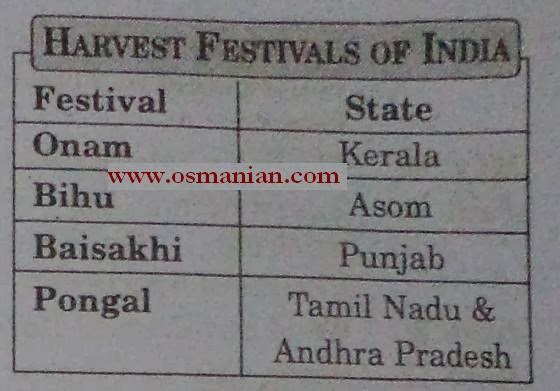
Harvest Festivals in India

 Harvest Festivals in India

Indian harvest festivals

various countries national days

Countries and Important Days
World - Countries and National Days
National Days = Independence Days
Countries and Independence day
The days on countries emerged or got freedom


Countries and Important Days
World - Countries and National Days
National Days = Independence Days

Public Garden Bagh-e-Aam

 Public Garden Bagh-e-Aam

Public Garden or Bagh-e-Aam. located in the heart of Hyderabad city, this park was constructed in 1846 by the then Nizam’s government. It is the oldest and biggest park in the city. The must visit attractions here are the Jawahar Bal Bhawan (to impart fine arts knowledge to children), Jubilee Hall, State Archaeological Museum, State Legislative Assembly, Telugu Lalita Kala Thoranam (an open-air theatre) and the Indira Gandhi Auditorium. The Government of Andhra Pradesh has recently erected an enormous statue of Mahatma Gandhi here.

Main Page

Tourist Spots in India Hyderabad Birla Mandir

Tourist Spots in India Hyderabad Birla Mandir
Built a quarter of a century ago, exclusively with marble procured from Rajasthan, the Birla Temple is devoted to Lord Venkateswara, known as Balaji in the south. The temple, on the Kala Pahad (hill) displays a fusion of South Indian and Rajasthani architecture. The 11 ft colossal figure of Lord Venkateswara in the sanctum sanctorum is sculpted in black granite.


Tourist Spots in India Madhyapradesh Bhopal

Tourist Spots in India Madhyapradesh Bhopal
Bhopal, the capital of Madhya Pradesh, is a dignified fusion of the
old and the new, with its broad tree-lined roads, fashionable markets and cultural centres, as well as the mosques, winding alleys and bustling crowds of the old city. It is also the gateway to several exciting destinations, including two World Heritage Sites, Sanchi and Bhimbetka. The caves at Udaigiri and the Shiva Temple at Bhojpur are also worth visiting. For those looking for a short wildlife excursion, Ratapani Wildlife Sanctuary is just 60 kms from Bhopal.

Indian Tourism Tourist Sites in North Zone South Zone East Zone West Zone

Indian Tourism Tourist Sites in North Zone South Zone East Zone West Zone
North Zone States - Tourist Sites

1. Delhi
2. Jammu &Kashmir
3. Himachal Pradesh
4. Uttarpradesh
5. Rajasthan
6. Uttarakhand
7. Punjab
8. Haryana
9. Chandigarh
10. Arunachal Pradesh
11. Assam
12. Manupur
13. Meghalaya
14. Tripura
15. Mizoram
16. Sikkim
17. Nagaland

 South Zone 
18. Andhra Pradesh
19. Karnataka 
20. Kerala
21. Tamilnadu
22. Telangaana

East Zone 
23. Andaman Nicobar Islands
24. Bihar
25. Jharkhand
26. Odisha
27. West Bengal


West Zone
28.  Chattisgarh
29. Dadra & Nagar Haveli
30. Daman Daiu
31. Gujarath
32. Goa
33. Madyapradesh
34. Maharashtra


Tourist Attractions in Hyderabad Telangaana India

Tourist Attractions in Hyderabad Telangaana India
Tourist Spots in Hyderabad

Area : 194 sq kms
Altitude : 536 m above sea level
Temperature : Summer-Max: 400C Min: 250C
: Winter-Max: 290C Min: 130C
Average annual
Precipitation : 79 cms
Best Season : October to February
STD Code : 040
Language : Telugu, Urdu, Hindi, English


Located on the Deccan Plateau, Hyderabad, the sixth
largest metropolitan city in India is also the capital
of Andhra Pradesh. Hyderabad was established by
Mohammad Quli Qutub Shah, the fifth ruler of Qutub
Shahi Dynasty in the year 1591. It was only a matter
of time before the Qutub Shahis were replaced by
the Nizams. The city was famed for its riches, beautiful
palaces, and of course its pearls and diamonds,
during the reign of the ‘Nizams’ who ruled for over
200 years.
The city is an incredible mix of ancestral legacy
and the modern times. Its individual
character is defined by an elegant blend of the beautiful,
ancient palaces and very modern and state-ofthe-
art offices and buildings. The influence of the IT
sector is such on the city that its outskirts are known
as ‘Cyberabad’.
Hyderabad is an archipelago of tourist attractions
and activities; explore the historic monuments and
museums, relax at the serene lakes and parks, relish
the scrumptious cuisine and enjoy the shopping experience.
Hyderabad tenders a mesmerizing vista of
the past, with a blend of rich, cultural and historical
custom traversing over 400 vibrant years.


Tourist attractions in Hyderabad 


Birla Balaji Temple
Birla Planetorium

Charminar
Chow Mohalla Palace
Falaknuma Palace
Golconda Fort
Hyderabad Botanical Garden
Hussain Sagar Lake-Tank Bund-Lord Buddha Statue

Imax Theatre
Koti - Sultan Bazar Market 
Koti Women's College (Once a British Resident's Palace)
Mahavir Harina Vanasthali National Park
Mecca Masjid
Nehru Zoological Park
NTR Garden
Osmania University
Paiga Palace
Paiga Tombs
Pochampalli
Prasad IMAX Complex
Public Garden / Bagh-e-Aam 
Ramoji Film City
Salar Jung Museum
Sanghi Temple

Seven Tombs
Shilparamam
Sundarayya Park
Tank Bund
Hyderabad City Local Route Map

Heritage Sites N Tourist Places in Karnataka

Heritage Sites N Tourist Places in Karnataka


                                        Heritage Sites
Badami
Banavasi
Barkur
Belur
Halasi
Hampi-The City of Ruins
Lakkundi
Pattadakal
Somnathpur
Srirangapatna


Tourist Places in Karnataka India

Tourist Places in Karnataka India
!. Heritage Sites / Forts in Karnataka Details and Photos
2. Divine Place - Temples - Pilgrim Centres in Karnataka Details and Photos
3. Wild Life Sanctuaries in Karnataka Details and Photos
4. Beaches in Karnataka Details and Photos
5. Museums in Karnataka Details and Photos
6. Hills and Mountaineering in Karnataka - Adventure Tourism Details and Photos
7. Water Falls in Karnataka Details N Photos

Divine Place - Temples - Pilgrim Centres in Karnataka

Divine Place - Temples - Pilgrim Centres in Karnataka
Pilgrim Centres in Karnataka

Ambalapady
Anegudde
Bappanadu
Belavadi
Devarayanadurga
Dharmasthala
Gokarna
Guddattu Jaladhivasa Maha Ganapathi Temple
Hattiangadi
Horanadu
Idagunji
ISKCON
Kadiyali
Kadri Manjunatha Temple
Kalasa
Kamalashile
Karinjeshwara Temple
Kateel
Kodyadka Annapoorneshwari temple
Kollur Mookambika Temple
Koodalasangama
Koteshwara
Kudroli Gokarnanatha Temple
Kukke Subrahmanya Temple
Omkareshwara Temple
Mangaladevi Temple
Male Mahadeshwara Hills
Mandarthi Durga Parameshwari temple
Melkote
Moodbidri Thousand pillar temple
Murudeshwar
Nanjangud Nanjundeshwara Temple
Narahari Parvatha Sadashiva Temple
Nellitheertha Cave Temple
Padubidri
Pajaka - Dwaita philosopher Madhwacharya's birth place was Pajaka.
The Kunjaragiri Durga temple
Polali
Puttur Mahalingeshwara Temple
Sahasralinga
Saundatti Yellamma Temple/Savadatti Renuka Yellamma Temple
Shankaranarayana
Sharavu Maha Ganapathi Kshetra
Shishileshwara Temple
Shraravanabelagola
Somanathapura Chennakeshava Temple
Sirsi Marikamba Temple
Southadka
Sringeri
Talakad
Ulavi Channabasaveshwara Temple
Udupi Krishna Temple
Virupaksha Temple

Beaches in Karnataka India

Beaches in Karnataka India
1. Agumbe Beach
Located on the Western Ghats in Karnataka.


2. Bheemeshwari Beach
100 km from Bangalore.
Bheemeshwari beach is situated on the banks of the River Kaveri. 


3. Galibore Beach

4. Gokarna Beach

5. Kabini River Lodge - Situated near Nagarhole National Park.210km away from Bangalore.

6. Karwar Beach

7. Kaup Beach

8. Kurumgad Beach

9. Malpe Beach

10. Marawanthe 

11. Murudeshwar beach

12. Panambur beach 

13. Someshwar beach - Rudra Shile are the big rocks in the Someshwar Beach. 

14. St. Mary's Island- a collection of small islands in the Arabian Sea. Malpe Coast.Udupi district. 

15. Surathkal Beach

16. Tannirbavi Beach 
17. Ullal Beach

Hill Stations in Karnataka India

Baba Budan Range Hill Station -Part of the Western Ghats.

Dandeli Hill Station - locted on the banks of River Kali. white water rafting is a nice attraction for the tourists.


Kemmangundi hill station : Chikmagalur district. Situated at a height of 1434 meters above sea level.

Kodachadri Hill Station - Situated in Shimoga district of Karnataka state. Its has over 3200 feet
height monolithic rock formations.

Nandi Hills/Nandidurg - Located in Chikkaballapur district. 60 Kilometres away from Bangalore. Ancient period Nandi Temple is located on this hill.

Yana Hill Station -

Sanctuaries/National Parks / Nature and Wild Life in Karnataka India

Sanctuaries/National Parks / Nature and Wild Life in Karnataka India
Sanctuaries/National Parks / Nature and Wild Life in Karnataka

Anshi National Park
340 sq km. Near Dandeli wildlife sanctuary.

Attiveri Bird Sanctuary
Near Mundgod,
Uttara Karnataka.
It is protecting 79 species of birds including migratory birds from 22 countries.


Bandipur National Park
India's most famous sanctuary it also serves as Tiger reserve.

Bannerghatta National Park
Established in 1971.
22 KM away from Bengaluru.
Spreaded in 25,000 acre land.

Bhadra Wildlife Sanctuary
38 km from Chikmagalur.
birds, butterflies and reptiles.

Biligiriranga Swamy Temple Wildlife Sanctuary or BRT Wildlife Sanctuary
On the boarders of Tamil Nadu.


Cauvery Wildlife Sanctuary attracts nature lovers, wildlife enthusiasts and bird watchers.


Dandeli Wildlife Sanctuary


Dubare Elephant Camp - We can see trained elephants in Dubare Elephant Camp.


Gudavi Bird Sanctuary - We can find 191 varieties of birds in this sanctuary.


Kaveri Nisargadhama -

Kokkrebellur - Situated in Mandya district. Meaning of the Kannada word Kokkrebellur = The village of storks in kannada language.


Kudremukh National Park - Maximus varieties of plants and animals. spreaded in the area of over 600.32 sq km. Situated 1,894.3 m above sea level.

Mandagadde Bird Sanctuary

Mookambika Wildlife Sanctuary

Nagarahole National Park

Ranganathittu Bird Sanctuary

Water Falls in Karnataka India


Abbey Falls near the town, Kodagu or Coorg.


Alekan Falls

Chunchanakatte Falls

Gokak Falls

Hebbe Falls

Iruppu Falls

Jog falls

Kalhatti Falls

Lalguli Falls

Magod Falls

Sathodi falls

Shivaganga falls

Sirimane Waterfalls

Shivasamudram falls

Unchalli falls

UGC JRF NET Paper 1 mock test 1 in English

UGC JRF NET Paper 1 mock test 1 in English UGC JRF NET Paper 1 mock test 1 in English UGC JRF NET Paper 1 ...